Recognizing Peptide Purity Screening Identification verification validates the certain secretagogue being examined. Peptides like BPC-157 and TB-500 utilized for injury healing applications ought to get complete verification. Identity verification is vital considering that alternative with various substances would basically change the study strategy. The screening process entails particular actions to make certain precise results and proper example handling. For these high-stakes scenarios, the expense of screening is insignificant contrasted to prospective effects of utilizing unverified items. For scientists following methods from sources like the BPC-157 and TB-500 piling guide, verified product quality ensures the method receives a reasonable evaluation.
Where Are Purity Outcomes Commonly Reported?
The pureness of peptides is established making use of logical techniques such as reversed-phase high performance liquid chromatography (RP-HPLC) and mass spectrometry (MS). Amino acid analysis can additionally be made use of to compute return or real amount of peptide. Peptide pureness screening is among one of the most essential elements of study peptide quality control. Clearly, there is a lot greater than 5mg of "things" in that vial. While identification, amount, and sterility are simple and essential, pureness is not something that is being totally & correctly analyzed today and is offering a false complacency to customers in this room. Confirm the safety and security and effectiveness of your reconstitution service.
Standard Pureness (≥ 95%)
What equipment is made use of to evaluate peptide purity?
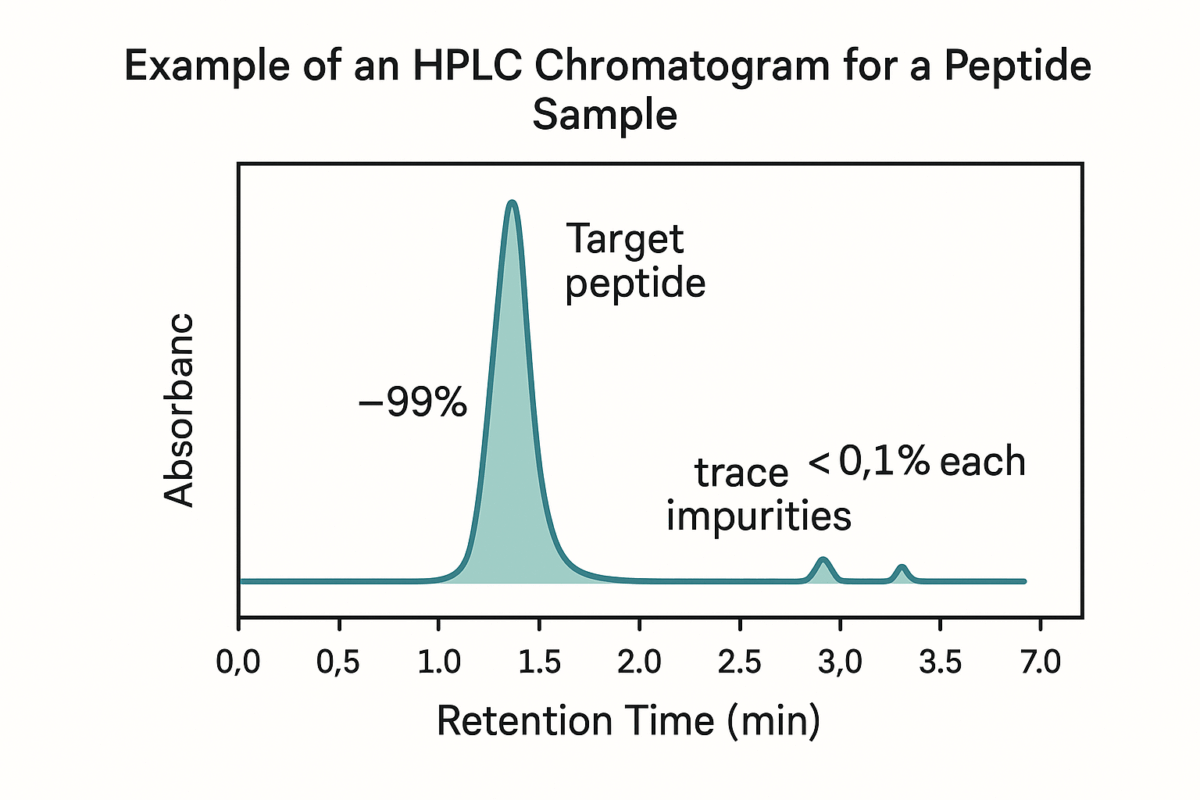
Peptide purity is consistently figured out by HPLC (high efficiency liquid chromatography). This technique enables separation and loved one metrology of each peptide synthesized. If paired to a mass spectrometer (MS), this offers molecular mass/ identification information of the target peptide and coming with pollutants.
The Limulus Amebocyte Lysate (LAL) examination is the common method for endotoxin metrology. It makes use of a clotting reaction from horseshoe crab blood cells that is specifically caused by bacterial LPS. Results are shared in Endotoxin Systems per milligram (EU/mg) Peptide Works UK or per milliliter (EU/mL). This is because HPLC only catches peptide relevant content, and as a result the 1% residual is made up only of peptide-related pollutants. Some labs (e.g., Janoshik) provide numerical pureness reports without chromatogram photos. A lack of chromatogram does not invalidate the results, rather it is a function of how they provide results to customers. However, as a best method we recommend asking a new tester for the chromatogram file to ensure it matches what they have actually supplied in the examination result. Trustworthy vendors use independent, third-party research laboratories to create COAs. Third-party testing removes conflict of rate of interest and gives the scientist impartial, empirical data-- not advertising and marketing cases.
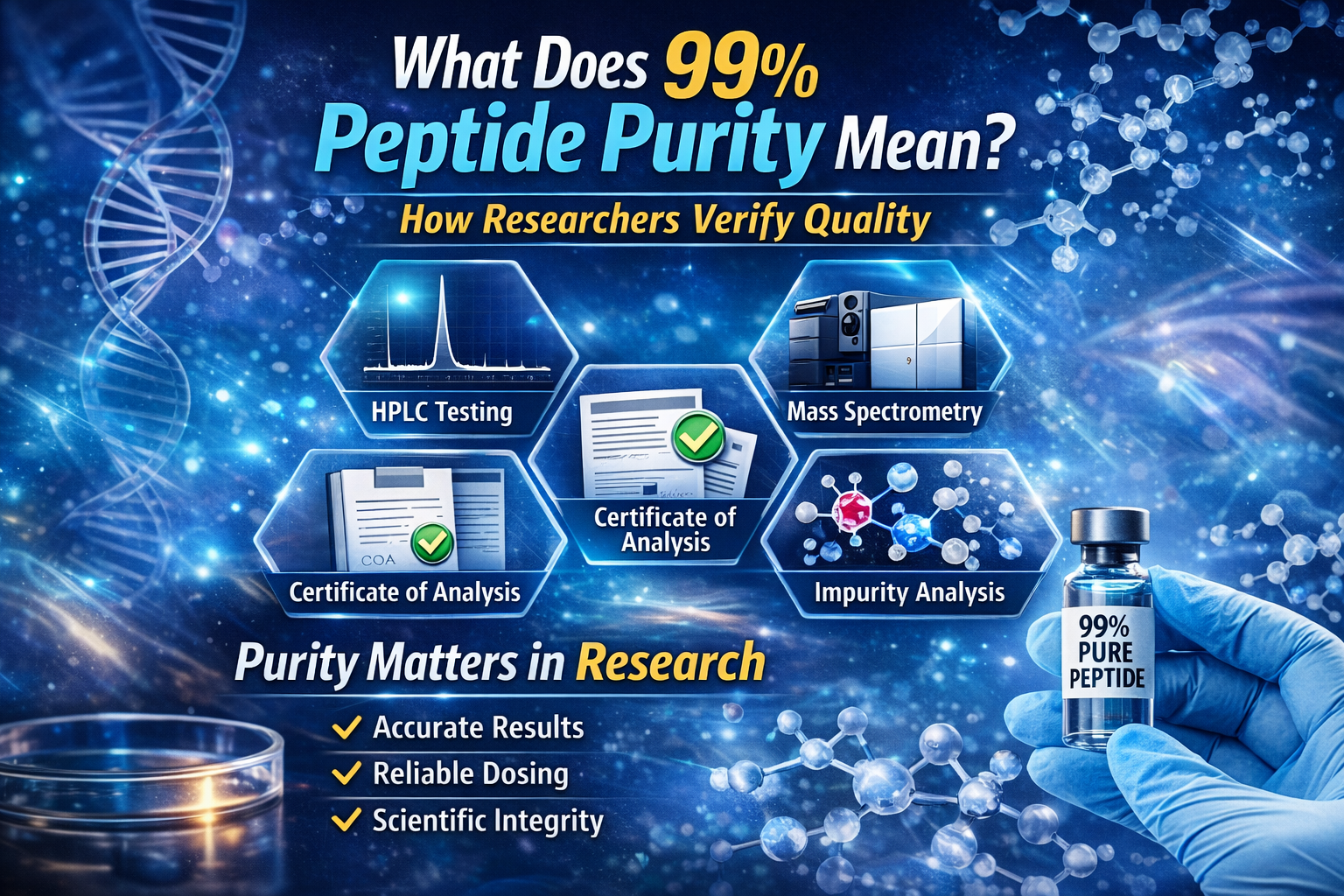
Scientists typically evaluate purity alongside various other top quality metrics instead of counting entirely on a solitary percentage.
High-performance fluid chromatography (HPLC) validates ≥ 99.3% purity, while mass spectrometry (MS) validates molecular identity and structural accuracy.
Peptide pureness is usually expressed as a portion, such as 95% or 98%.
The peptide dose graph thinks reasonable purity degrees for exact application.
When assessing a COA, researchers need to try to find the complying with details. A strong peptide screening operations uses techniques that respond to corresponding concerns. The table below is the sensible means to think of typical examinations when checking out a peptide COA. Validates the specific molecular weight and confirms the peptide's identification. At Maxed Out Substances, every item we provide includes a clear screening document and transparent paperwork. Our mission is to support researchers with high-purity, verified compounds that satisfy the demands of modern clinical research-- nothing more, nothing less. We use dialysis, ultrafiltration combined with HPLC/UV techniques to scientifically assess encapsulation efficiency and medication loading. Initially, a tiny amount of the peptide is liquified in a liquid and injected into the HPLC machine. That liquid is after that pushed with a slim tube (called a column) under high stress. Inside the column are tiny fragments that briefly "get onto" various materials in the example. Additionally, keep in mind that "research-grade" peptides are suggested for the lab bench and include high purity and identification checks yet are not generated as medicines. Always check that your peptide comes with correct analytical information (HPLC chromatogram and MS outcomes) and is classified for study usage. Equipped with this understanding, you can with confidence translate labels like "95% purity, research grade" and utilize those peptides to drive your experiments without confusion. For research study entailing any organic system (cell culture, in vivo animal versions), endotoxin data is very appropriate and its lack needs to be dealt with as an insufficient COA. Third-party screening labs of note in the peptide study supply chain include accredited analytical chemistry solutions that operate under ISO or equal high quality management structures. A COA recognizing the testing laboratory by name, and for which the testing research laboratory's accreditation can be separately validated, lugs significantly a lot more evidentiary weight than an anonymous inner COA. The majority of peptide distributors and research study labs count on a number of reputable analytical methods. High purity is desirable since even tiny contaminants may hinder experimental results or interpretations.